Traffic fit
How to Attract the Right Visitors to Your Website
Use this traffic-fit framework to choose one useful channel, match the source to the right page, and measure whether visitors are taking the next step before you scale.
On this page
The quick answer
To attract the right visitors to your website, do not start with "more traffic." Start with a route.
Choose one segment with a real reason to care.
Pick where that audience already searches, listens, or trusts.
Match the source promise in the first screen.
Give one next step that fits the visitor's intent.
Use the first traffic wave to check useful action.
For a new site, a good starter test is one search-focused guide, one founder or operator post, one partner or customer loop, and one 7 to 14 day measurement window before changing the page again.
If the page cannot explain the offer, show proof, and make the next step obvious, traffic will amplify confusion.
The wrong visitors are not a growth win
A visitor is not useful just because analytics counted a session. The visitor is useful when the source, page, and next step match.
- Visitors arrive with a question the page does not answer.
- Visitors expect education but land on a hard sales page.
- Visitors are curious but not close enough to the problem to take action.
- Visitors trust the referrer but the landing page does not mention the same promise.
- Visitors read, leave, and have no clear path back to the task.
This is why broad traffic advice can be frustrating. "Post on social," "write SEO content," or "run ads" is not enough. The channel only works when the route after the click makes sense.
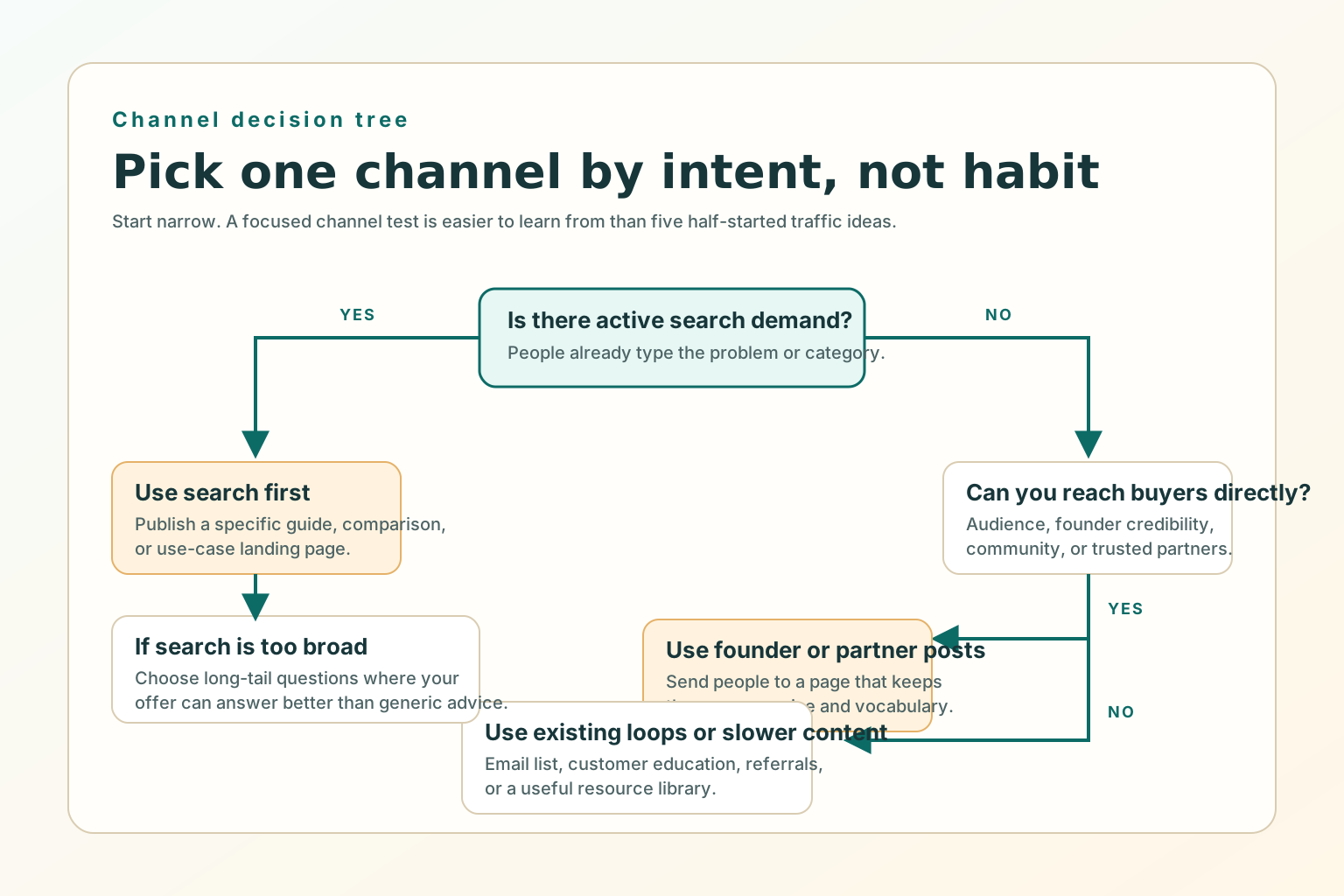
Pick channels based on buyer intent
The easiest way to choose a first channel is to ask where intent already exists.
Search
Use search when people already describe the problem, category, comparison, or task in plain language. Good search pages answer one specific question deeply enough that the reader can make progress without buying.
- How to install a marketing script with Google Tag Manager
- Website launch checklist for founders
- Best browser tab title messages
- How to reduce bounce rate without popups
Founder-led posts and social distribution
Use founder-led posts when trust, point of view, and repeated explanation matter more than keyword demand. If the post says "before you buy more traffic, fix your first screen," the page should open with the same problem and give the next step.
Communities and partnerships
Use communities and partnerships when the audience already gathers around a problem and there is a trusted reason for them to listen. Good partner traffic is a matched context, not just a borrowed list.
Existing customer or subscriber loops
Use customer and subscriber loops when you already have people who trust you, but have not returned to a specific offer, feature, product, or resource.
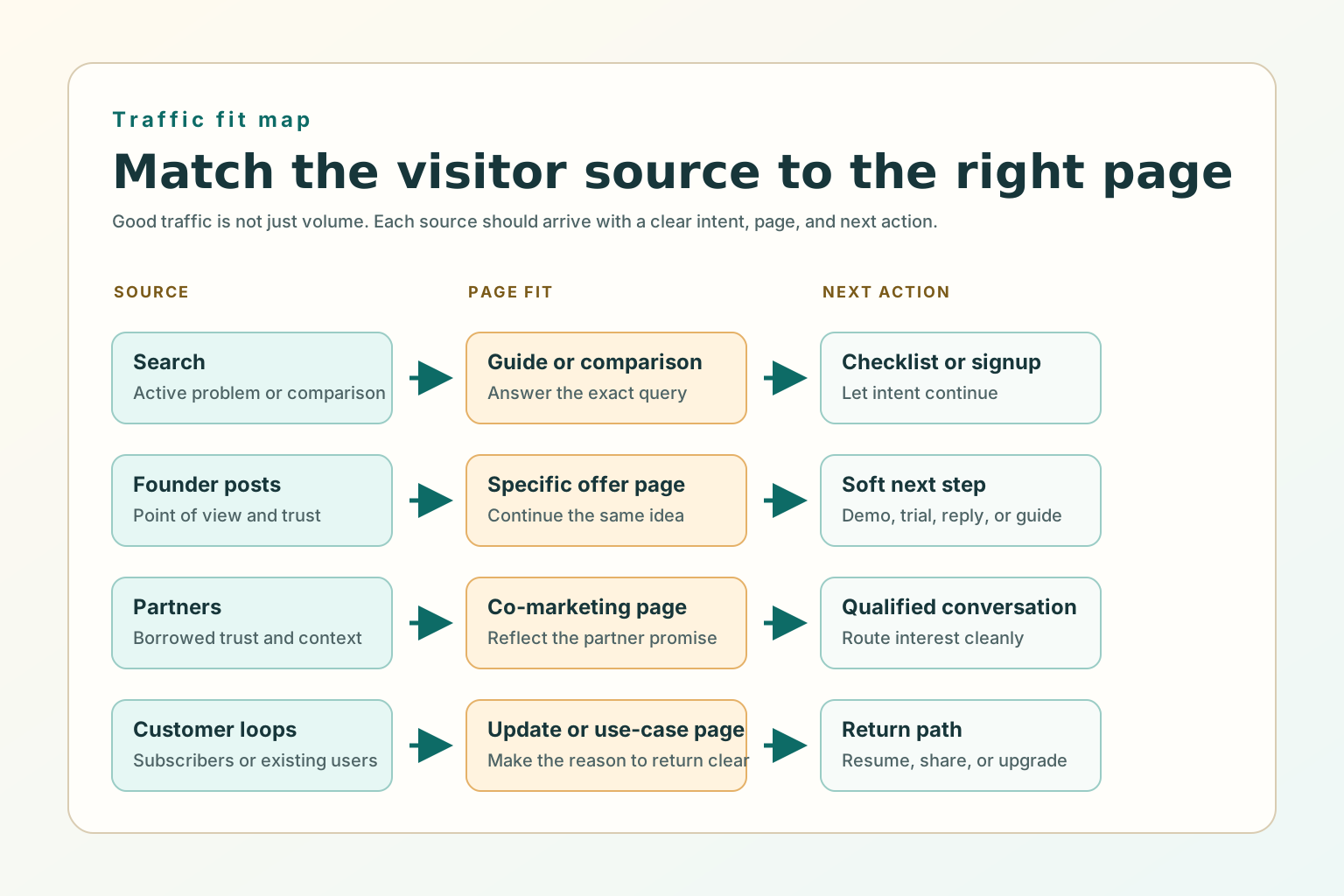
Match each source to the right page
Every traffic source has an expectation. The page should honor it quickly.
Use a specific guide, checklist, comparison, or use-case page instead of a generic homepage.
Send people to a page that expands the same claim, example, or framework.
Use a tactical article, template, or diagnostic checklist before a hard demo request.
Use a partner-specific landing page that reflects the shared promise.
Use an update, use-case page, saved workflow, or next-step page.
The first screen should answer three questions: am I in the right place, does this continue the promise that made me click, and what is the next useful step?
What to fix before scaling a channel
Before you ask for more visitors, fix the page so the first small wave can teach you something.
Offer-message fit
The source promise and page headline should use compatible language. They do not need to be identical, but they should clearly point to the same problem.
One primary next step
Give each traffic route one main action: read the checklist, try the related tool, view pricing, book a demo, use the worksheet, request help, or resume the workflow.
Proof near the claim
Proof should appear where doubt appears. For a new site with limited proof, use a clear founder explanation, specific product examples, transparent pricing, a public guide, and direct support details. Do not invent metrics, testimonials, or customer stories.
Page speed and mobile basics
If the page is slow or awkward on mobile, traffic quality will be hard to judge. Test the route on a real phone before scaling.
- Open the page on mobile data or a throttled network.
- Tap the primary CTA.
- Complete the form, checkout, booking, or signup path.
- Check that no sticky element blocks the action.
- Confirm the title, meta description, canonical URL, and internal links match the public page.
What to measure after the first wave of traffic
The first wave of traffic should answer a fit question, not prove the whole business.
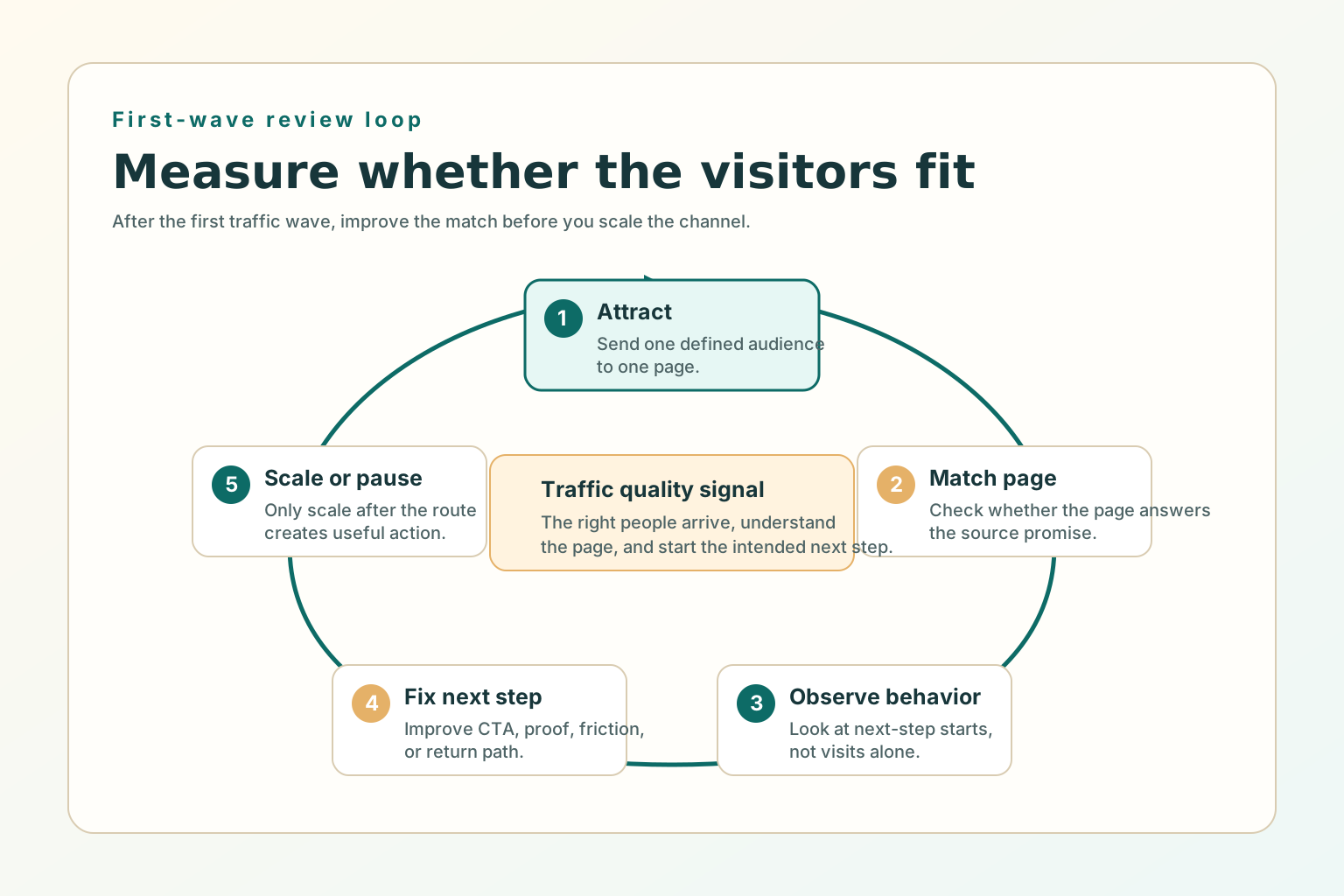
Use a simple 7 to 14 day review window for a beginner channel test. Look for useful action, not visits alone.
- People from the source continue past the first screen.
- Visitors click the intended next step.
- Demo, pricing, signup, cart, or contact starts increase from that source.
- Visitors return to the same page or related page later.
- Qualified replies mention the same problem the page promised to solve.
- Support or sales conversations become easier because the page set context.
SEO and AEO checks for attracting better visitors
SEO and AEO are clarity work. Google says helpful content should be created for people first, and its link guidance emphasizes crawlable anchor links that help users and Google understand connected pages.
- Write for one intended audience and one practical job.
- Put the useful answer in visible HTML text, not only inside images, video, or client-only UI.
- Use a descriptive title and H1 that match the page's real value.
- Use internal links with normal
<a href>anchors so related guides and next steps are crawlable. - Add Article or BlogPosting structured data only for visible article content.
- Keep metadata, headings, sitemap entries, and agent-readable Markdown aligned.
- Make each section easy to summarize with a direct answer near the top.
- Avoid writing to a fake word count or stuffing repeated keyword variants.
For answer engines, the practical question is simple: can an assistant summarize who the page helps, what problem it solves, and what the reader should do next without guessing?
Good use versus poor use
Good use
- Choosing one channel test because the audience and page match.
- Creating a specific page for a specific traffic promise.
- Measuring next-step starts and qualified interest, not visits alone.
- Improving the first screen before changing the whole channel strategy.
- Adding a calm return path for visitors who were interested but got distracted.
Poor use
- Posting everywhere with no matching page.
- Sending every source to the homepage because it is easier.
- Buying broad traffic before the offer and next step are clear.
- Treating SEO as a list of keywords instead of useful answers.
- Using popups, fake urgency, or noisy reminders to compensate for weak page fit.
Test before you ship
- Open the source message and landing page side by side.
- Check whether the first screen continues the same promise.
- Say the intended audience, problem, and next step out loud within 10 seconds.
- Click the primary CTA on desktop and mobile.
- Ask one target-reader-like person what they expected before clicking and what they understood after landing.
- Confirm the page title, meta description, canonical URL, internal links, image alt text, and structured data match the page.
- Wait for the first review window before adding another channel.
Mistakes to avoid
- Starting with five channels at once.
- Measuring traffic volume without separating source quality.
- Writing broad SEO content that does not help the reader make a decision.
- Sending educational visitors straight to a hard sales action.
- Changing the page every day before you have enough signal.
- Forgetting to build a return path for visitors who leave mid-task.
Where TitleFlash fits
TitleFlash is not a traffic source. It does not replace SEO, founder-led distribution, partnerships, customer loops, or a clear landing page.
It fits after the visitor has already shown interest. If someone opens a pricing page, demo page, guide, cart, or setup flow and then switches tabs, a short inactive-tab title can help them notice the unfinished task again.
That works best when the page already matches the source promise and gives the visitor a clear next step.
Add a respectful return path for visitors who were interested but distracted.
The exported TitleFlash script is self-contained. It does not call TitleFlash after installation, does not load a TitleFlash CDN, and does not send visitor analytics back to TitleFlash at runtime.
Build a tab-title flow freeFinal checklist
- Pick one audience segment.
- Pick one traffic source where that audience has intent or trust.
- Build or revise one page to match the source promise.
- Give the page one primary next step.
- Add enough proof to reduce the main doubt.
- Test the CTA path on desktop and mobile.
- Review the first traffic wave for useful action, not visits alone.
- Add a respectful return path only after the page itself is clear.